![[EN] Poladent](https://www.poladent.cz/en/wp-content/uploads/sites/2/2025/02/poladent-logo-primary-small.png)


Many people spend months, even years, considering whether to get dental implants. The reason? Fear. Pain, complications, uncertainty about the treatment process, or the fear of failure – these are all understandable feelings that patients bring to the dentist.
In this article, we address the most common myths and fears surrounding dental implants and explain how the treatment actually works .
1. “Will it hurt?”
This is probably the most frequently asked question. The answer is: No, the procedure itself is painless . It is performed under local anesthesia, ensuring a pain-free experience. Most patients find implantation less unpleasant than a tooth extraction.
After the procedure, the wound may be sensitive, which is a normal part of the healing process. However, the pain can be easily managed with common painkillers and usually subsides significantly within two to three days.
2. “What happens if the implant doesn’t integrate?”
The success rate of implantation is very high nowadays – over 95% of cases are successful . The risk of failure is minimal, especially if:
- They are in good general health.
- They don’t smoke.
- They pay attention to their oral hygiene.
- They follow the doctor’s instructions.
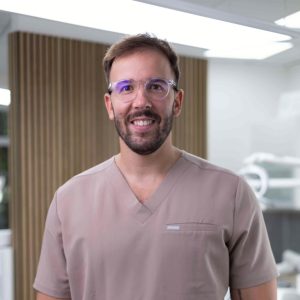
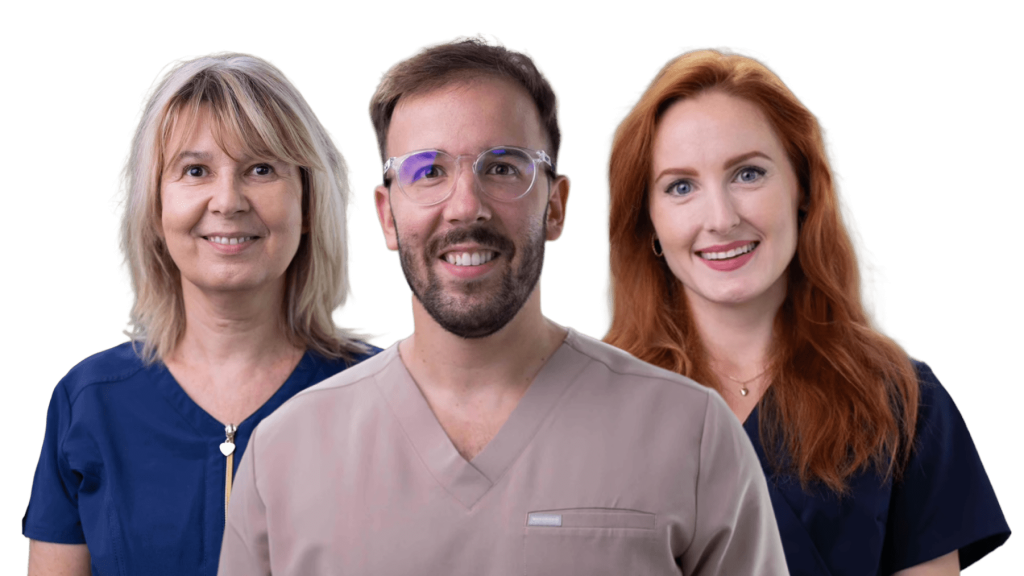
The dentist’s experience also plays an important role – Dr. Polach has performed hundreds of successful implantations in Pilsen and uses first-class, certified implant systems.
3. “I have very little bone mass. Does that mean an implant is not possible?”
Bone deficiency at the implant site is no longer an obstacle. Modern dentistry offers various solutions:
- Bone building (supplementation) ,
- Sinus lift (elevation of the floor of the maxillary sinus),
- or the use of shorter or specially shaped implants.
The doctor always performs a 3D diagnostic scan, which shows whether the procedure is possible immediately or whether the conditions need to be adjusted.
4. “How long does the healing process take?”
That depends on whether the implant is subjected to stress immediately or after it has healed. In most cases:
- The first healing phase lasts 2–3 weeks (soft tissue).
- Complete integration into the bone takes 2–4 months .
Only then is the crown or bridge fitted. In some cases (e.g., with All-on-4), it is possible to insert temporary teeth immediately, so that the patient does not leave the practice without teeth.
5. “The implant is expensive. Is it even necessary?”
Yes, the price is not insignificant. But at the same time, the implant is:
- does not exert any stress on the surrounding teeth , as can be the case, for example, when making a bridge.
- It preserves the bones and thus prevents their loss.
- It lasts for decades and is therefore a long-term solution.
While removable dentures often need adjusting, implants are long-lasting. And if you want a high-quality, aesthetic, and comfortable solution, they are the best choice.
6. “How exactly does the implantation process proceed step by step?”
🦷 1. Consultation and planning
The dentist will conduct an examination, take an X-ray or a CT scan, and propose a treatment plan. He will explain the different options and create a schedule.
🦷 2. Inserting the implant
The procedure takes approximately 30–60 minutes and is performed on an outpatient basis under local anesthesia.
🦷 3. Healing
The healing time varies, but is usually 2 to 4 months. During this time, the implant fuses with the bone.
🦷 4. Adjusting prostheses
A crown, bridge or full denture is attached to the implant – the result looks natural and behaves like your own tooth.
7. “What if I’m generally afraid of doctors?”
Dental anxiety is widespread, but the modern approach in dental practices looks different today. At Dr. Polach’s practice, you can expect the following:
- Humane, unhurried approach
- thorough explanation of each individual step,
- comfortable, stress-free environment.
Many patients lose their fear after the first visit – the main thing is to decide to take this first step .
Summary: Worrying is normal, but unnecessary.
Dental implants are a safe and proven method that can significantly improve your quality of life. If you are hesitant due to fear or lack of knowledge about the procedure, talk to a specialist. They will explain everything to you and suggest a gentle solution.
Are you considering dental implants? Schedule an appointment with Dr. Polach in Pilsen – he has many years of experience, uses state-of-the-art technology, and offers you personalized and relaxed treatment. Take the first step towards a new smile today.