![[EN] Poladent](https://www.poladent.cz/en/wp-content/uploads/sites/2/2025/02/poladent-logo-primary-small.png)

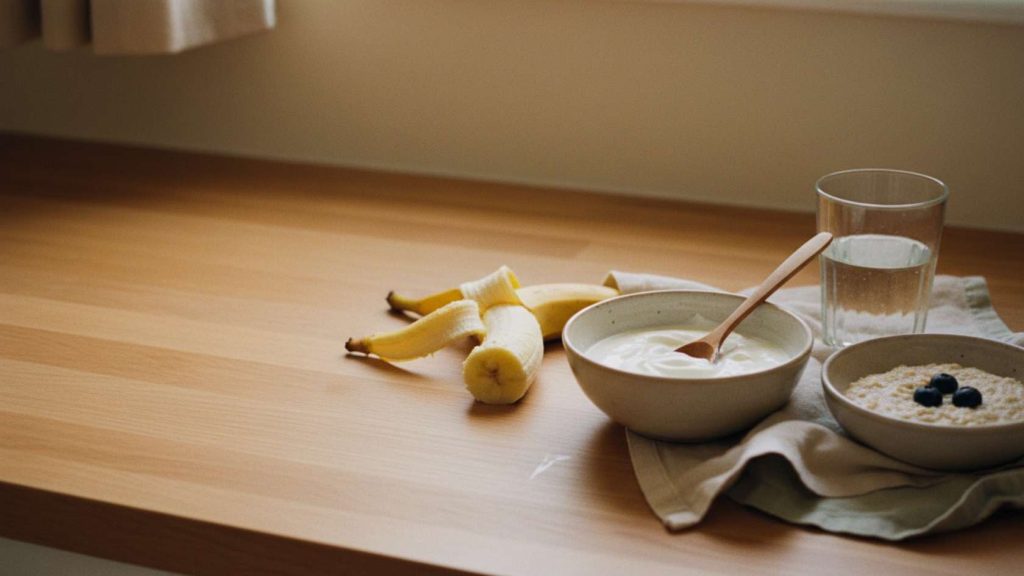
After your implant procedure, you will receive a long list of instructions all at once — and it is easy for the question of diet to get lost in the mix. Yet what you eat in the first days and weeks directly affects how quickly and smoothly your implant heals. A wrong choice — say, a hot cup of tea or biting into a hard piece of bread the very next day — can cause unnecessary bleeding, infection or, in extreme cases, jeopardise the stability of the implant.
You do not have to guess, though. We have put together a precise diet guide — day by day — from the moment you leave the surgery until you return to your normal menu.
Why diet after implant placement matters so much
Once placed in the jawbone, the implant is not immediately firmly anchored — it must first go through a process called osseointegration: the titanium screw gradually fuses with the bone, which takes 3 to 6 months. During this period, the surgical site is sensitive and prone to damage.
Mechanical irritation — a hard mouthful, biting on the implant, a hot drink — can disrupt the forming blood clot, increase inflammation or delay the implant’s fusion with the bone. Conversely, the right nutrients actively support healing. A review of 19 studies published in Nutrients (Nastri et al., 2020) confirmed that key micronutrients — particularly vitamin D, vitamin C and magnesium — play a crucial role in osseointegration, and their deficiency demonstrably increases the risk of implant failure.
So the post-implant diet is not just about what to avoid — it is also about actively supporting healing.
What to eat in the first days after the implant (days 1–3)
The first 72 hours are the most sensitive for healing. Stick to liquid and pureed food only — at room temperature or chilled.
Suitable foods:
- Yoghurt, quark, Greek yoghurt
- Smoothies and fruit purées (no seeds or stones)
- Protein shakes (an excellent source of protein for healing)
- Lukewarm or cold soups — fully blended, with no chunks
- Oatmeal cooked until soft
- Mashed banana or avocado
- Pudding, panna cotta
What about ice cream? A clear yes — but without hard chunks of chocolate or nuts. The cold naturally reduces swelling and soothes discomfort.
Tip: Drink at least 2 litres of water a day. Hydration speeds up tissue regeneration.
A typical day’s menu for days 1–3 might look like this: oatmeal with mashed banana for breakfast, plain yoghurt with a glass of water as a mid-morning snack, blended vegetable soup (lukewarm) for lunch, a protein shake or smoothie in the afternoon, and quark with honey plus a lukewarm chamomile tea for dinner.
Wondering which supplements might help you after the implant? Ask us directly during a consultation at Poladent.
Diet in the first weeks after the implant (days 4–14)
Once the initial swelling and tenderness ease off, you can gradually move on to firmer but still soft foods.
Suitable foods:
- Scrambled or boiled eggs
- Steamed or roasted vegetables (carrot, courgette, potatoes)
- Pasta cooked until soft
- Fish (salmon, cod) — boneless, ideally steamed
- Tofu, lentil or bean purée
- Soft bread without crust, boiled rice
Nutrients that actively support healing:
A clinical study in Clinical Implant Dentistry and Related Research (Li et al., 2018) showed that patients with adequate vitamin C intake achieved statistically better wound healing after implant placement. You will find vitamin C in peppers, broccoli, oranges or rosehip tea — at this stage of healing, all of these are safe in cooked or juice form.
Do not forget proteins (essential for collagen formation and tissue repair) and calcium with vitamin D (the building blocks of bone). Good sources are eggs, fish, dairy products and fortified plant-based drinks.
What to avoid after the implant — forbidden foods and habits
These rules are not arbitrary. Each one protects your investment in the implant.
Forbidden foods:
- Hard and crunchy: nuts, bread crust, raw carrot, ice in the mouth, hard sweets
- Hot drinks and food above 40 °C — heat dilates blood vessels and increases the risk of bleeding from the wound
- Acidic and spicy dishes — irritate the mucosa around the implant
- Chewing gum — overloads the jaw in the sensitive area
Forbidden habits:
- Alcohol — excessive consumption demonstrably increases the risk of late implant failure and also interferes with the antibiotics your dentist will most likely prescribe
- Smoking — of all the risk factors, this is the biggest threat: smokers have twice the implant failure rate compared with non-smokers
- Drinking through a straw — the suction creates negative pressure in the mouth and can dislodge the blood clot
To make the boundaries clear: allowed are yoghurt, quark and pudding, lukewarm soup, fish, eggs and tofu, soft bread without crust, water and cold tea, and ice cream without chunks. Forbidden are nuts, crisps and popcorn, hot coffee or hot tea, tough meat and bones, crusts, baguettes and crackers, alcohol and energy drinks, as well as chewing gum and caramel.
When you can return to a normal diet
Healing is individual — it depends on the extent of the procedure, your overall health and your discipline with aftercare. An indicative timeline:
- After 2 weeks: the vast majority of foods are fine, but still avoid extremely hard or crunchy foods and smoking
- After 6 weeks: an almost unrestricted diet, just be careful with sudden chewing on the implant
- After 3–6 months: osseointegration is complete, the implant has strength comparable to a natural tooth — no dietary restrictions
Frequently asked questions
Can I eat ice cream after a dental implant?
Yes — cold ice cream without hard pieces (no chocolate chunks, nuts or biscuits) is welcome after an implant. The cold naturally eases swelling and dampens the onset of pain. Avoid ice creams with hard add-ins or extremely sugary varieties that irritate inflamed tissue.
When can I drink coffee after an implant?
Hot coffee is off the menu for the first 48 hours — heat increases blood flow and the risk of bleeding. Lukewarm or cold coffee is fine from around day three. Treat yourself to a proper hot coffee no earlier than after a week.
What if I am hungry but cannot eat anything solid?
Reach for calorie-dense but soft foods: avocado, thick Greek yoghurt, nut butters (smooth, not chunky), eggs, a protein shake. Keep your overall energy intake normal — going hungry slows down healing.
How long does it take before I can eat normally?
Basic dietary restrictions apply for 2 weeks. Most patients return to a normal diet within 4 to 6 weeks. Full osseointegration takes 3 to 6 months, but this does not restrict your diet — just avoid sudden forces directly on the implant.
Can I drink alcohol after an implant?
Alcohol is strictly forbidden while you are taking antibiotics (usually 7 days) and during the first week after the procedure. After that, moderate amounts are fine, but excessive consumption statistically and demonstrably increases the risk of implant failure — and this risk persists in the long term.
Conclusion
The right diet after an implant is not complicated — it is just different from usual. Liquid food and soft meals in the first days, a gradual return to normal eating over two weeks, and avoiding alcohol, smoking and hard food during the healing period. That is all you need to follow so that the implant integrates firmly and lasts for decades.
Have questions, or is your implant procedure still a few weeks away? Call us or book online at www.poladent.cz — we will be happy to walk you through everything before the procedure, so you know exactly what to expect.